
Haptic
Materials museum design challenge
OVERVIEW
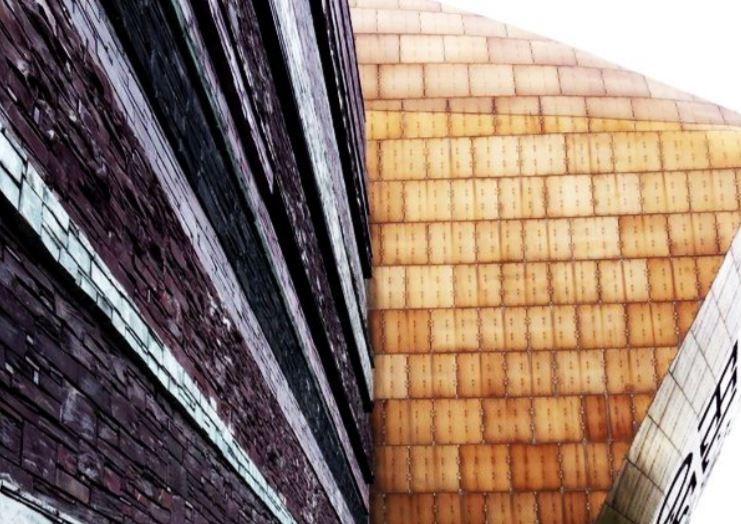
Img 1: The Millennium Centre in Cardiff Bay, Wales, showcasing contrasting materiality. Source
Premise
All tangible architecture is born at the confluence of design, technique, and execution. No great architectural work is bereft of it. However, the one element of architecture that not only encompasses all three, but also sometimes supercedes them is Building Material. It is the dimension of architecture that helps it attain the physical, tangible form it develops into.
All truly sensational buildings, achieve a fine balance between their design, the intangible and the material, the visible part, the tangible, while merely functional buildings aspire to it. The knowledge of its properties, both visual and tactile, its utility, suitability, application, and availability are an inimitable part of both the practice and education of architecture.
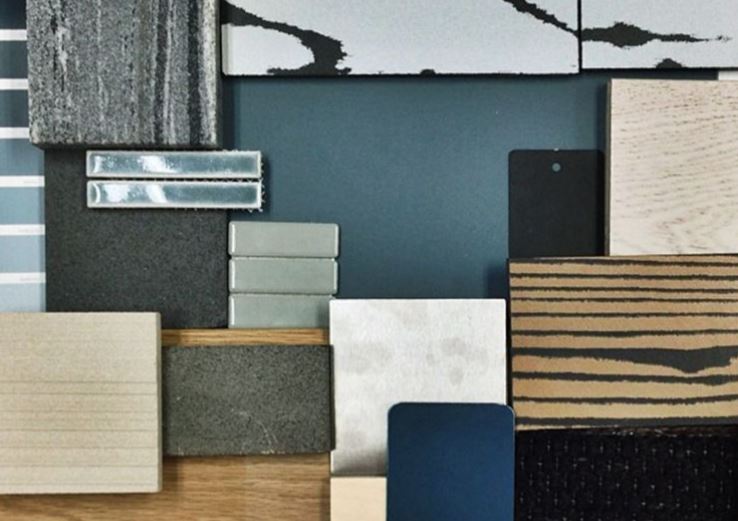
Img 2: An indicative image of a material mood board. Source
Materiality in Architecture
Material in Architecture has bourne significance not only as an element of construction, but also as an element of aesthetic. This belief peaked during the time of the Bauhaus movement, ushering in a new wave of ‘modern’ architecture that revelled in the display of the building’s constructional constituents rather than its cosmetic concealment. The belief of that movement was rooted in honesty and transparency towards the building’s user and fellow designers, and thus lead to a greater degree of appreciation for the science and artistic endeavour of material choices in buildings.
Through various mutations and layers, the movement, or the belief has found its way to current architecture. However, can this connection between user/designer and material be made even stronger? Can architecture itself serve as a showcase of its own composition? Can adding an interactive element to it help in better understanding of materials and construction?
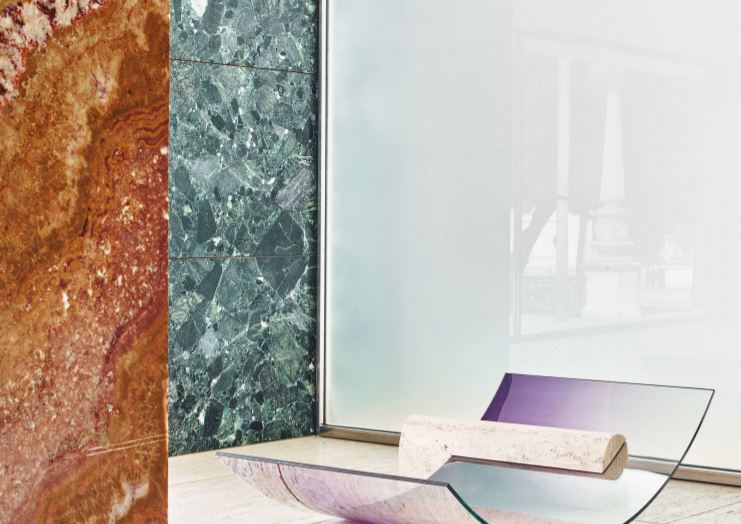
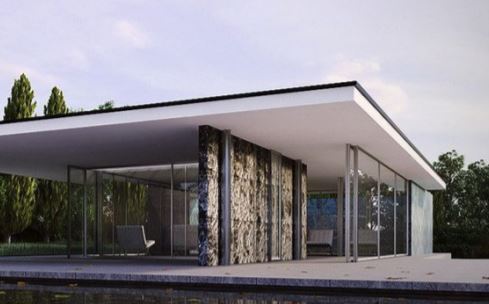
Img 3: ‘No Fear of Glass’ by Sabine Marcelis, a sculptural intervention that responds to the materiality of Mies van Der Rohe's Barcelona Pavilion. Source
Brief of the competition
The brief is to design a showcase for building material in architecture itself: a “Museum of Materials” to promote knowledge, understanding and appreciation of the role of material within construction and architecture.
Over the past few years, museums have moved from displaying preserved objects to housing sensory, experiential narratives. Thus, the exhibits in the Museum of Materials can be anything that relates to material: homogenised blocks of different materials, both conventional and upcoming, sustainable and ostentatious, interior and exterior, structural and cosmetic; or a monolithic slab of unprocessed raw material.
The idea is to draw attention to the physical, tactile and visual properties of building material through both the display and the building itself becoming characteristic of that, in an attempt for the visitor to touch these, explore, be inspired and gain knowledge of material characteristics and construction techniques.
Objectives


Engaging/Involving/Educative: The element of interaction with the material displays must be incorporated to enhance the educative aspect of the material museum.
Tangibly Tactile: Participants must find a way for the material exhibits to be physically accessible to the visitors.
Experiential: The idea of the museum and its design must be rooted in creating a holistic experience for visitors.
Reflective/Representative: In essence, participants must look for the material museum to represent material in and of itself, through innovative use of its own materials.
The above are the more qualitative aspects that the design of the material musuem must satisfy, and can be a beginning point for participants to conceive their design, concept and ideas related to it.
the MUSEUM
The Museum of Materials has a unique opportunity of being both, a traditional display housing artefacts, as well as a more experiential outlet. The displays in this case, building materials, will have two aspects to their curation, display, and the experience they provide: tactile and visual, allowing visitors to fully engage. This would end up dictating the design of the building and its interiors, and that is what this challenge is about.
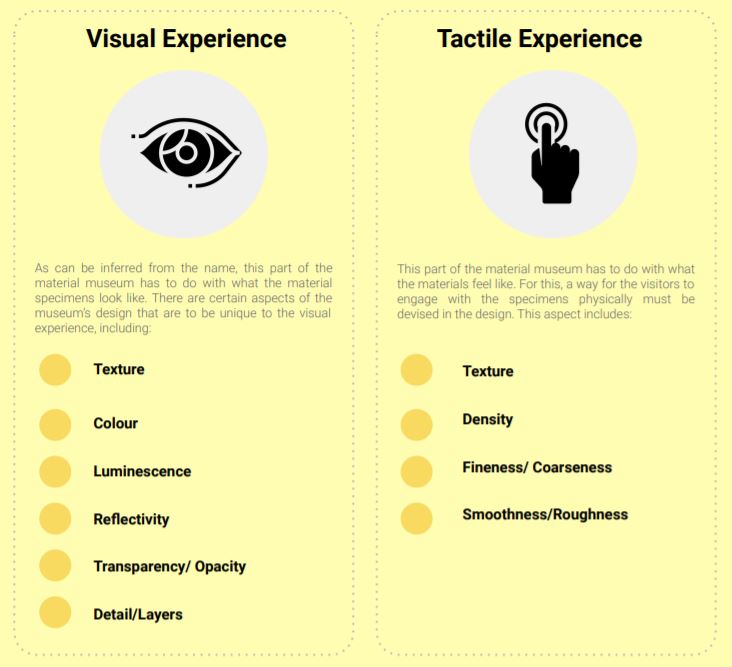
Design Guidelines
The aspects stated above may serve as a criterion for segregation of the display of materials, as well as factors to be emphasised on in the museum’s display to ensure an interactive and holistic experience combining both.
the EXHIBIT
The exhibit in this museum is material itself: in all its forms, shapes, properties. And that alone can have a lot of myriad forms of representation/display. However, those forms of display are what guide the design of the museum and the spaces within, just as most experiential museums today. It is entirely up to the participants as to what they wish is displayed: from the softest fabric for furnishing to the hardest stone. Some of these distinctions in material (not exhaustive) are stated below.
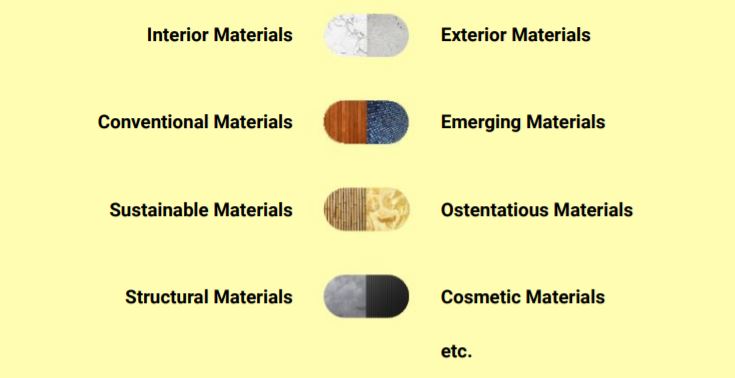

The above infographic indicates the size/shape/form of material exhibits that designers and participants are free to play around with. Depending on the material being displayed, they can be raw, uncut, monolithic blocks, homogenised blocks on typical display platforms, homogenised slabs, or any other form that participants think complements their design and the competition objectives well. In all these, however, an interactive, tactile element must be maintained.
Space Program
Administrative
- Offices
- Information Centre
- Curatorial Centre
Public
- Seminar Hall (for workshops etc)
- Cafeteria
- Shop
Display Spaces/ Galleries
- Primary Design Element
- Temporary/Permanent
- Small/Medium/Large Scale
Services
- Toilets/Lavatories
- Storage
- Mechanical
*List of spaces are only indicative and not exhaustive, indicating a bare minimum for a museum to function. Participants are free to explore, innovate, and add more facilities/spaces to their design as they see fit.
Barcelona, Spain
Barcelona is a city on the coast of northeastern Spain with a population of roughly 1.6 million. It is one of the world's leading tourist, economic, trade fair and cultural centres, and its influence in commerce, education, entertainment, sports, media, fashion, science, and the arts all contribute to its status as one of the major global cities. Architecturally, the city is world renowned for the works of Antoni Gaudi, the Barcelona Pavilion by Mies Van Der Rohe, and has now gained prominence as a smart city with its highly developed infrastructure.
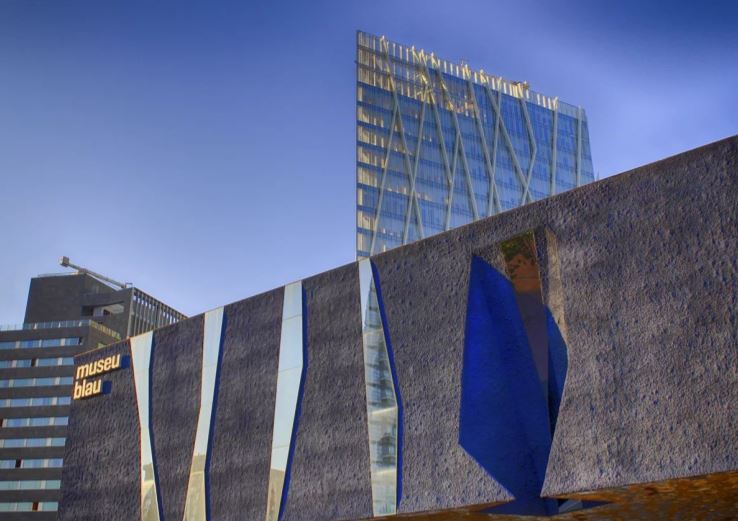
Img 4: The Torre Diagonal and Museu Blau as examples of modern architecture in Barcelona, showcasing the city’s avant garde architecture and materialism.. Source
Context
The architecture and built context of Barcelona has been stated to be rather flamboyant, ranging from Antoni Gaudi’s world famous renaissance architectural works to the present. A lot of Catalan modern contemporaries have since contributed to Barcelona’s changing cityscape, and it was put into motion after Mies van Der Rohe brought Bauhaus to the Barcelona Pavilion for the world exhibition. While the construction hasn’t really slowed since then, the turn of the 21st century saw the transformation of historic buildings and recent years have brought fantastical skyscrapers to the city’s skyline.
Another distinctive element of the city’s architecture is its instantly recognisable urban planning, the superblocks. The site thus chosen is also highly reminiscent of these architectural features, while being close to the city centre and commercial core as well.
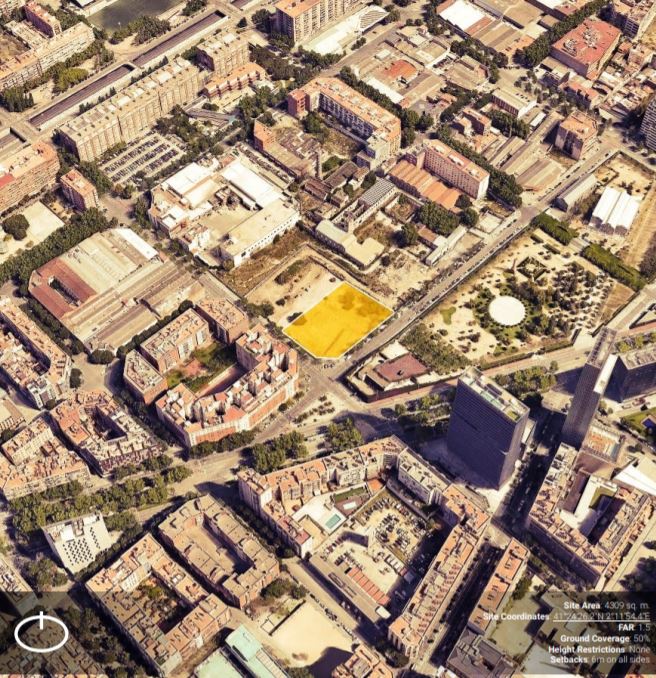
Img 5: Aerial View of the Site
Site Plan
The proposed site for the material museum is located a little offset from the city centre housing the major tourist attractions, but is located at a driveable distance from the Sagrada Familia, Plaça de Catalunya and the Gothic Quarters of Barcelona. As can be seen, the site is surrounded by traditional superblocks as well as modern skyscrapers. The district is particularly famous for graffiti art on its walls, and the street on which the site lies, Carrer de Bilbao, is a complete testament to that. All areas near the site are bicycle and pedestrian friendly.


